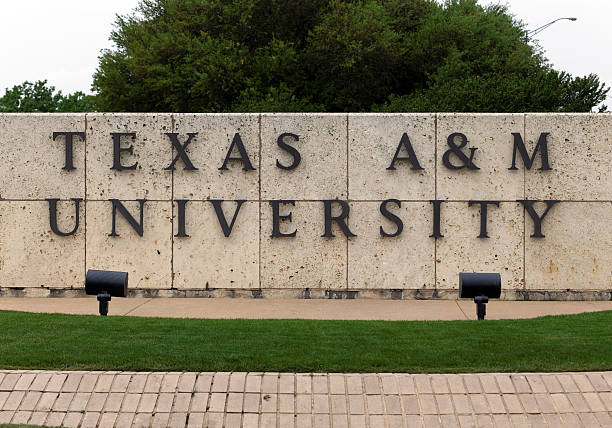
For gifted and driven individuals, the Texas A&M University Scholarship provides a fully supported chance to pursue a PhD in the United States. The scholarship allows students to concentrate on their academic and research objectives by covering significant study-related costs, such as living expenses, research support, and full tuition.
Two fully funded PhD positions in the developing topic of water digital twins are being sought after by Texas A&M University–Corpus Christi’s Water and Environmental Systems Analysis (WESA) Laboratory. These jobs, which are anticipated to start in the spring of 2027, will offer financial assistance for a maximum of four years, provided that students make good academic progress.
The creation of digital twins for regional water resource systems will be the main emphasis of PhD Position 1. In order to support sustainable water resource planning, research fields include interbasin water transfer, hydrologic and hydraulic modeling, forecast-informed reservoir operations, water systems optimization, and environmental flow management.
The second PhD position will focus on integrated digital twins for coastal urban water infrastructure. Stormwater drainage networks, rainwater harvesting systems, wastewater reclamation and reuse, smart water management technologies, and urban water systems’ climate resilience are some of the research areas.
Candidates who are chosen will get the chance to collaborate directly with top academics, make use of cutting-edge computational techniques, contribute to highly influential scientific publications, and obtain invaluable experience in tackling actual water and environmental issues. Students with backgrounds in computer science, data science, hydrology, water resources engineering, environmental engineering, civil engineering, or allied fields are especially well-suited for this program.
Host Country: United States
Institution: Texas A&M University
Opportunity Type: PhD, Postgraduate
Eligible Applicants: International Students
Financial Coverage: Fully Funded
Eligibility Criteria:
Applicants should meet the following qualifications:
- Hold a master’s degree in civil engineering, environmental engineering, water resources engineering, or a closely related discipline.
- Demonstrate experience in configuring and calibrating SWMM (Storm Water Management Model) or comparable hydrologic/hydraulic modeling tools.
- Possess experience in setting up and calibrating HEC-HMS or similar watershed and rainfall-runoff modeling software.
Preferred Qualifications
- Candidates with the following skills and experience will be given preference:
- Knowledge of ensemble-based precipitation forecasting or streamflow modeling techniques.
- Experience using remote sensing technologies for monitoring surface water, evapotranspiration, or soil moisture.
- Ability to develop WebGIS applications and portals using platforms such as ArcGIS Online, Mapbox, or related tools.
- Practical experience conducting environmental, hydrological, or water resources field investigations.
- Familiarity with the analysis, simulation, and modeling of socio-environmental systems and their interactions with water resources.
Benefits:
- Texas A&M University-Corpus Christi offers a fully financed PhD program.
- Financial assistance is given for a maximum of four years, providing that students make good academic progress.
- covers all of the program’s tuition costs.
- includes a living allowance each month to help with living costs.
- funds initiatives and activities pertaining to research.
- supports the expense of publishing the results of scholarly research.
- includes funding for travel and conference attendance.
- provides chances to participate in cutting-edge environmental and water systems research.
- The PhD program is set to start in January 2027 (spring semester).
Required Documents
Applicants should prepare and submit the following documents as part of their application:
- An updated Curriculum Vitae (CV) or résumé detailing academic qualifications, research experience, and relevant achievements.
- A Statement of Research Experience and Interests outlining previous research work, academic background, and future research goals.
- Copies of relevant research outputs, such as:
- Published or unpublished research papers
- Manuscripts
- Conference presentations
- Thesis or dissertation chapters
- Technical reports
- Other scholarly or research-related materials
- Three letters of recommendation or contact details of three academic/professional referees who can evaluate the applicant’s qualifications and research potential.
Deadline: September 15, 2026